
Meraki - Sustainable skateboard company
5,479 words
Module Overview
For this project, I will create a series of motivational artworks that spread awareness about global issues through photography, paintings, and other creative methods. These designs will be translated onto sustainable products such as skateboards, clothing, and potentially a wide range of other items that relate to the message of each piece. The goal is to produce products that not only raise awareness around important topics but also directly support the people or causes they address. To demonstrate this, I will produce six original paintings and six photographs which will be adapted into twelve unique skateboard designs. These boards will be fully customised, including deck graphics, wheels, trucks, and other components tailored to each design. I will also develop concept sketches for additional product ideas and create t-shirt versions to show how easily the artwork can be applied across different sustainable products. Along with strong marketing strategies to gain a steady increase in Meraki’s consumers, like rebuilding disused parks and hearing the stories from real skaters.
Project Introduction / Aims and Goals
Each collection will include six designs, and for every collection, I will select one piece to generate a larger charitable impact, with the first few collections aiming to donate between 10 and 25 percent of profits to charity. Each charity will be thoughtfully selected based on the subject matter of the design, ensuring the cause supported is directly connected to the message being communicated. Meraki has the potential capacity to upscale, meaning that as the brand grows, prices can increase slightly, allowing for higher charitable donations while maintaining sustainability and quality. Due to one of our core brand promises being to keep our products affordable, we aim to avoid significant price increases in order to maintain our audience’s trust and perception of the brand. To achieve this, we will explore more cost-effective production methods. Once we’ve generated enough revenue at our current pricing, we plan to source materials within the UK to reduce tariffs and shipping costs. The UK already has bamboo farms, custom 3D modelling services for niche products, and numerous facilities for apparel production and printing, making this shift both practical and sustainable.
Beyond the products, I envision how this brand, Meraki, could expand into community focused initiatives. One idea involves cleaning up disused skateparks and restoring them for public use, followed by hosting community events at these revitalised spaces. These events could include competitions, giveaways, and even cash prizes funded by sponsors. I would aim to record and share these events online, giving exposure to both the sponsors and the community participants. To support and promote this idea, I will create a video showing a friend and I cleaning up a disused skatepark and proving that it is safe and rideable again. This video will act as both promotional material and an example of the kind of real world action Meraki could take with proper support. I will also produce shorter promotional videos optimised for platforms such as Instagram and TikTok, offering quick and engaging content that links to longer documentary style videos. These will help attract attention and provide a clear, visual portal into the broader brand message. This concept draws inspiration from brands like Red Bull, whose core business is selling energy drinks but who have successfully built a far reaching cultural identity by investing in activities and content that reflect their product’s energetic nature. From motorsport to world record attempts, Red Bull has used high intensity experiences to promote their drink and lifestyle. Similarly, Meraki could grow into a platform that promotes sustainability and creative activism through physical events, online storytelling, and positive community engagement. It would represent a lifestyle rooted in conscious living, environmental responsibility, and a balanced mind and body.
To tie everything together and present the brand as a functioning concept, I will also design a wireframe or basic prototype of a website where the products and ideas could be shared and purchased. Additionally, I will aim to build a real example of a skateboard from my designs to show how the concept can be brought to life. Altogether, this project will showcase my creative versatility, my ability to develop ideas through challenges and my research and organisational planning skills. Most importantly, it will reflect my deeply personal connection to nature, a passion for being active, and a belief in people coming together to protect and restore the world around us.

Photo by Adam Kubrakiewicz, featuring Ryan Sheckler, courtesy of Red Bull.
BRAND IDENTITY / TARGET AUDIENCE RESEARCH
In order to identify my target audience, I first needed to research the purchasing behaviours within the skateboarding community. This involved exploring what products they typically invest in beyond the skateboard itself, what influences their choice of brand, which features they prioritise in terms of both design and functionality, and how this insight can be applied to effectively engage specific demographics and encourage consistent growth from a dedicated and relevant following. It can be challenging for social media accounts to convert engagement into actual customers, as many users may react to a video but not take the next step to explore the brand or product further. This is often because they don't feel represented by the brand. It's not just about needing the item in that moment, but about whether the content sparks passion or connection with the audience. Alongside Meraki being mainly a skating brand, its community of kind creators should help drive the brand into gaining customers outside skating for posters, stickers, and future 3D products.
Brand loyalty in skateboarding is built on authenticity. Skaters often support rider-owned brands like Anti Hero, Independent, and Vans, which are seen as true representations of skate culture. Instead of being swayed by flashy marketing, the community values function, performance and durability — gear that can handle the realities of skating. Influential professionals like Ishod Wair and Lizzie Armanto help shape preferences through their personal style and credibility, making them more than just brand ambassadors. Skateboarding is closely tied to identity and self-expression. What brings the community together is a shared passion for the sport, the time and effort it takes to improve, and the supportive environment where skaters help each other progress. It also carries a rebellious spirit, often reclaiming public spaces and resisting corporate influence. This is one reason many skaters prefer smaller, core brands over large companies that don’t reflect their values. Local skate shops like Slam City Skates in London go beyond selling products. They serve as community hubs where skaters return regularly for gear and are recognised as individuals. This sense of belonging creates loyalty that faceless online retailers cannot replicate. The regular need to replace parts like decks or grip tape only strengthens these connections.
Charities such as SkatePal, which builds skateparks in Palestine, are highly respected in the scene because they reflect the skateboarding community’s values. They support youth, create opportunity, and share the joy of skating. Altogether, brand loyalty in this space is earned through genuine connection, cultural understanding and consistent support. This is exactly what I aim to establish with Meraki as a brand. By creating content that makes Meraki feel relatable and rooted in the real community, the more recognisable and respected we become. Over time, this will allow us to collaborate with professionals in the scene and embed ourselves fully into the culture. Furthermore our charity decks, like the one supporting SkatePal, is a key example of a way to not only give back but inspire others to take action. Whether it is buying a deck that contributes to a cause, or starting their own initiative and getting recognised by Meraki for a potential collaboration, we want to be the brand that celebrates and uplifts the people making a difference in skateboarding culture. Meraki also aims to expand into niche products such as wax, tools, shoes and bags, allowing loyal customers to support the brand across more aspects of their lifestyle. This will not only encourage deeper brand engagement but also appeal to supporters outside our core skate demographic who connect with our values and charitable mission. To maintain accessibility, Meraki will prioritise offering a variety of designs that help keep costs low while ensuring the quality, functionality and practicality of our decks and merchandise remain consistently high.

Photo Courtesy of Skate Pal at INASH AL-USRA SKATEPARK (2023)
Competition Research
Arbor Skateboards leads in sustainability with bamboo decks with its iconic surf-inspired design, appealing to eco-conscious skaters. Other notable brands include Langbrett, using recyclable Kareline fibre, and Uitto, crafting boards from ash wood and eco-friendly materials. Wasteboards makes organic cotton apparel, Volcom incorporates recycled fishnets, and Bureo turns bottle caps into decks. Each showing different approaches to sustainability in skateboarding.
In the UK, cities like London and Bristol have rich skate cultures. London’s Southbank is iconic, and Palace Skateboards has blended skating with streetwear fashion. Bristol’s Harbourside remains a hub for inclusive skate events and community spirit, while Brighton, closer to home, offers a similar creative energy and local support. Globally, California remains skateboarding’s heartland, born from surf culture in places like Venice Beach and Dogtown. Legends like Tony Hawk and Nyjah Huston continue to influence the sport through competition and brand partnerships, keeping the California skate legacy alive worldwide.
If Meraki opened a store, it would likely be between Hampshire and West Sussex or in a key skate city like London or Bristol. Local brands such as Rubicon Skateboards in Winchester, known for supporting parks and hosting events, offer both competition and collaboration opportunities. By partnering with such brands, Meraki can embed itself in the community while standing out through charity work and projects like revitalising skateparks. Collaborating with UK skate influencers like Jonny Giger, NKA Vids, and Braille Skateboarding, along with mainstream internet personalities such as the Sidemen, could further boost visibility and help Meraki become a recognised name in both skate and youth culture. This approach also recognises the importance of cultural production and community identity in skateboarding, concepts explored by Hesmondhalgh (2013) who discusses how subcultures maintain authenticity and resist mainstream commercialisation, a balance Meraki strives to achieve through meaningful local engagement and collaborations.

Photo of Southbank by Matt Stuart / Time Out London
Product Research
In developing my product, I have carefully selected materials that support sustainability while maintaining the high level of functionality needed in skateboard construction. For the decks, bamboo was chosen for its rapid renewability, strength-to-weight ratio and shock-absorbing properties, making it a more sustainable and resilient alternative to traditional maple, which grows more slowly and is more resource-intensive to harvest. The wheels are crafted from polyurethane, a recyclable, highly durable material resistant to abrasion, ideal for repeated street use. While polyurethane itself is commonly used, innovation in this area is emerging. One such example is a project by students in collaboration with Mentos and Vans, where chewing gum was repurposed into a material suitable for skateboard wheels. This concept demonstrates the creative potential for future sustainable wheel design and aligns closely with Meraki’s values of experimentation and environmental consciousness.
The trucks are made from aluminium alloy, a metal known for its excellent strength and lightness, which can also be recycled indefinitely without degrading. Zinc-plated steel is used for the nuts and bolts due to its durability and reusability, making it a more sustainable choice than untreated steel fastenings. Chrome steel ball bearings were selected for their longevity and recyclability, ensuring a smooth ride while reducing long-term waste. Following this, silicon carbide is used for the grip tape. It provides stronger grip and lasts significantly longer than many conventional abrasive materials, making it both a practical and longer-lasting option. The deck designs are applied using polymeric vinyl. While not inherently sustainable, this material has a high longevity, although tricks and repeated abrasion can shorten its lifespan. In future, Meraki aims to experiment with alternatives to vinyl that are both longer-lasting and made from renewable or recycled sources.
These components were primarily sourced through AliExpress in China, chosen for its accessibility and ability to offer bulk orders at reduced costs. However, this method has limitations in terms of sustainability, primarily due to the environmental impact of long-distance shipping and the difficulty in verifying labour conditions. In future iterations, sourcing materials locally within the UK could improve transparency and sustainability. Though bamboo is not native to the UK, it can be grown in British climates, and several UK-based farms cultivate it for construction and garden use. While no large-scale UK bamboo deck producers currently exist, this could provide long-term opportunities for collaboration in domestic production.
I have selected these materials to balance sustainability, design and performance. In the future, I may adapt them depending on the deck’s purpose, as long as they meet ethical and environmental standards. There are many sustainable alternatives to explore much like the chewing gum wheels, such as hemp composites, cork, flax fibre and recycled plastics. However, sustainability also relies on responsible sourcing, fair labour, regrowth of resources and the use of renewable energy. As more solutions are developed and tested, materials can evolve, just like the Mentos gum wheel project. These components helped me understand the cost of creating a more conscious skateboard design, which I mapped out through a finance document to plan costs, profits and future growth for Meraki.
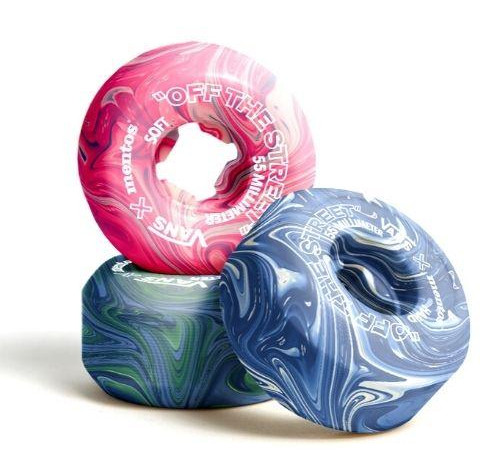
Photo credits to Hugo Maupetit and Vivian Fischer, Courtesy of L'Ecole de design Nantes Atlantique

Finance Research
My finance document is a brief overview of what a finance plan would look like for Meraki as well as an insight into costs of the product’s price per 100 full skateboards, delivery, and general market pricing. I calculated the price based on producing 100 skateboards at a time, aiming to sell each board for £120, a reasonable price for a premium skateboard. While this pricing can be flexible as production scales beyond 100 pieces, each year I plan to increase the price by 3.3 percent to account for inflation based on the general UK economy. Delivery costs for all components come to a total of £523.95, although this could be reduced by sourcing more suppliers in the UK, a mission for the future. The total cost of components for 100 skateboards is £1,939.49, making the overall cost including delivery £2,463.44. Selling 100 boards at £120 each would generate £12,000 in revenue, yielding a profit of £9,536.56 before other expenses. I did make some errors in my initial calculations, which I will learn from, as finance has never been a strong suit of mine.
Furthermore, if Meraki chose to donate 1 percent of annual sales to environmental organisations through the 1% for the Planet initiative, this would lower the overall profit to approximately £8,441.56 but leaves us with less money to re-invest into future projects. If Meraki eventually grew into my full-time work, I would have to make precautions as well to ensure I can live a healthy, happy life myself. With more board sales, I can use my finance document to be more flexible with the prices and charitable decisions.


Time Management
Time management has always been a challenge for me, particularly because traditional systems like Gantt charts often impose a rigid structure that doesn’t easily accommodate contingency time or allow for the flexibility needed when unexpected delays occur. Instead, I prefer to work by lists, writing down everything that needs to be done and categorising tasks by main and side objectives, noting what they influence and whether they are completed or need further editing.
To support this, I used Trello, which proved incredibly useful. It allowed me to colour-coordinate tasks by size, tick off completed items, and build research lists and produce brainstorms of products to sell. I could also include charities to support, add quick reference descriptions, and attach helpful links to each note. This system helped me tremendously and became one of my biggest accomplishments within this project, as time management had previously been a recurring weakness in my work. That said, there's still room for improvement. At times, work would still build up into overwhelming heaps. In the future, I aim to develop this method further by organising tasks into a more linear timeline, ensuring I prioritise what needs to be completed sooner in order to keep later stages on track.

Brand Design

For Meraki’s brand design, I prioritised simplicity and adaptability, choosing not to rely on a fixed colour palette. Instead, the identity centres on a distinctive, fluid “M” that can stand alone or be paired with the full wordmark. This allows the logo to remain flexible and recognisable across different contexts, much like Nike’s Swoosh or Apple’s bitten apple. The “M” is designed to feel organic and dynamic, subtly suggesting motion and creativity to reflect the expressive nature of the brand. The core identity remains black and white, acting as a neutral base that can be easily reinterpreted. Each board in the collection features a unique colour applied to the “M,” ensuring individuality across products without losing overall cohesion. This shape-led approach allows Meraki to express its creative and community-driven values while staying versatile and memorable.
Product Design
Each Meraki design is created to communicate a clear message through metaphors or quotes. The primary goal is to reflect the theme of the chosen charity in a meaningful, unique way. Designs should also be visible to the rider when they fall, offering moments of resilience in reflection. Some boards aim to inspire persistence, while others focus on promoting sustainable living and raising awareness for key issues. However, all designs should show support for the growth of people and the world. This range of designs also allows for varied pricing, giving Meraki flexibility to test what resonates most with customers and refine future collections during the design analysis stage. Every element from the deck to the wheels, trucks, and components is considered carefully, sacrificing other components' design to insure the best price in total while ensuring the visuals align with the charity.
To stand out from standard board designs on the market, I chose to work primarily with photography and painting, my strongest mediums. While I explored a graphic vector version using Illustrator, the results felt flat and clipart-like. I wanted each board to feel like a piece of art, not just a stickered design, with the artwork itself taking centre stage. Lastly, incorporating the Meraki logo onto each board’s griptape will help build brand recognition and strengthen the visual identity across the collection.

Design Analysis


The first collection begins with three simplified designs, each created to be transferred easily with vinyl stickers. These boards are positioned as the most affordable in the range, with minimal deck artwork offset by more intricate trucks and wheels to maintain a premium aesthetic.
The first design, titled “Grow Your Mind”, supports the charity Mind and features a tree with a face formed in the leaves. This visual metaphor suggests the importance of nurturing mental growth, aligning closely with the charity’s focus on mental health and personal development.
The second board features Einstein’s quote, “In the middle of difficulty lies opportunity” and supports Turn2Us. The artwork depicts a caveman chasing a piñata, symbolising perseverance in the face of hardship. Much like the hidden sweets inside a piñata, the design communicates that reward and opportunity often lie within challenges, directly linking to Turn2Us’s support for people facing financial adversity.
The third board, “The World is Your Oyster”, donates to Surfers Against Sewage. The globe represents the pearl within an oyster, reflecting both the preciousness and fragility of the Earth. By portraying the planet as small and delicate, it invites a deeper cultural appreciation of the world. Reminding us that if the world is so small, we ought to be more open with one another’s cultures and ways of life. The charity pairing emphasises environmental awareness, particularly focusing on the ocean, which is one of the most polluted ecosystems in the world. If we cannot sustain the health of our seas, it casts doubt on our future capacity to explore, travel, or survive sustainably.
The next set of designs in the first collection incorporates more detailed, full-deck artwork. These boards are priced higher due to their more involved visuals but kept affordable through simpler components.
The next impactful design reads “The Bamboo That Bends With the Wind is Strongest,” supporting the World Bamboo Organisation. Featuring simple bamboo illustrations against a bamboo-styled background, the design celebrates the natural flexibility and beauty of the material. As bamboo is a favoured medium in Meraki’s ethos, this board reflects the sustainable values and material authenticity that underpin the brand, encouraging deeper reflection on environmental harmony and strength through adaptability.
The board with the Native American quote “Only When the Last Tree Dies Will We Realise We Cannot Eat Money” donates to War on Want. The visual depicts a tree shaped like a hospital bed, connected to a drip and a heart monitor. The CO2 levels on the screen are elevated because it is a tree, but the racing heartbeat on the monitor reflects its failing condition. The piece starkly critiques consumerism and the cost of ecological neglect.
The board quoting Confucius, “He Who Conquers Himself is the Mightiest of Warriors” supports Samaritans. A sleek and minimal Spartan helmet anchors the design, tying back to the time period of the original quote. While the artwork is restrained, the trucks and wheels have been intricately designed to elevate the board’s overall aesthetic. This balance ensures the board retains a premium look while keeping the message focused on resilience and inner strength.
The second collection introduces photography-based designs. By using simpler designs on the first trucks and wheels, I can focus more on the artwork for the deck especially since these photographic compositions take up the full deck space and leave fewer opportunities to cut costs elsewhere. The final decks have taken into account all aspects of the board, so are highly priced.
The board “Make Love Not War”, supports Peace Direct and features flowers emerging from an empty bullet casing. This design is a nod to the counterculture and anti-war movements of the 1960s. Iconic images like The Flower and the Bayonet and Flower Power, which showed activists placing flowers into gun barrels, served as direct inspiration. The contrast of peace emerging from violence becomes even more profound when the context of real-world weaponry is brought into the frame.
“Love Can Be Found All Around Us” was created for WWF. It captures a quiet yet poignant moment between two ducks looking at one another. This photographic piece speaks to the often-overlooked emotional intelligence and connection within the animal kingdom and supports WWF’s mission to protect all creatures.
“Go Where You Feel the Most Alive” partners with The Woodland Trust and features hammocks suspended between trees. The peaceful image invites viewers to immerse themselves in nature and slow down. The message supports the Woodland Trust’s goal to protect ancient woodlands and make natural spaces more accessible for future generations.
One of the standout boards in the premium tier is “The Great Beyond”, supporting the Outward Bound Trust. The image captures a perfectly-timed moment of a seagull perched on a ruined building in Snowdon. The Outward Bound Trust is a charity that empowers young people through outdoor education, personal growth, and resilience-building adventures. I aimed to reflect their mission by capturing a moment so serene and poetic that it might inspire others to go out and experience nature’s awe for themselves.
“Never Stop Horsing Around” supports Play England and features a photograph of a row of horses in formation. This literal interpretation of the quote adds a playful and direct connection to the design, while the use of dark blue and white relay sleekness, paired with a slightly grungier and noisier visual style, grounds the board in an indie, skate-culture aesthetic. It aims to keep Meraki accessible and authentic within the skateboarding scene.
The final board that reads the quote “Every Fall is Just a Setup For The Next Trick”, supports SkatePal. It captures the first stranger skater I met through this project during a trick at the skatepark I cleaned. He wasn’t aware the park was still there, and his appreciation for that space was exactly the kind of response I aimed to evoke. This deck is deeply personal for both Meraki and SkatePal, symbolising grassroots growth and skateboarding’s community resilience.
Every board translates a deeper message into a form riders can carry with them. Importantly, each piece strives to stay relevant to skate culture through grunge-inspired fonts, two-tone colour palettes, and typographical styles ensuring that Meraki’s mission resonates authentically with the skating community.
Lastly, I had planned to create a large-scale model. However, after focusing more heavily on the initial design work and the skatepark clean up project, I decided to scale it down to a tech deck. While primarily intended as a display piece for the final year exhibition, it also serves as a tangible example of how a Meraki deck could look in real life.


Full Sized RAW Designs (with extra photos)


Future Product Sketches
These sketches showcase potential products Meraki could develop alongside boards and basic apparel, illustrating how the brand can expand beyond skating while maintaining its core personality. Each collection includes three concept products: one practical item tailored for skaters and two lifestyle designs that complement each other.
In Collection 1, the focus is on multi-use tools inspired by key designs. The pencil sharpener and rubber are based on the “Eat Money” design, cleverly combining two functions into one tree-shaped tool. The oyster-shaped bottle opener draws from the “World Is Your Oyster” design and includes a small storage compartment for bottle caps, encouraging users to hold onto them until they find a bin. The piñata wax block is inspired by the “Piñata” design, with its ears and features shaped for better grip and multi-edge lubrication to enhance skating performance.
Collection 2 is more clothing-oriented, featuring a sustainable bag inspired by the “Feel Most Alive” design. Made from durable canvas, jute, and recycled fishnet, the bag channels the relaxed style of a hammock, reinforced by thick, comfortable drawstrings for carrying ease. Its mix of materials not only ensures strength and recyclability but also aligns with Meraki’s commitment to eco-conscious fashion. The walking boots, inspired by the “Great Beyond” design, combine classic rugged styling with sporty, extended laces and a thick sole for reliable grip, crafted using sustainable materials like mushroom leather and recycled fibers. The final concept in Collection 2 is a skate helmet and pad set inspired by the Keep Pushing board design. It emphasizes the importance of safety gear in giving skaters the confidence and freedom to keep progressing and pushing their limits.
Together, these concepts demonstrate Meraki’s potential to diversify its product line beyond traditional skate culture, using the brand’s values and creativity to explore innovative, commercially viable products.


Marketing Strategy
The goal of this project was to demonstrate how Meraki could contribute to the regeneration of abandoned skateparks, turning them into usable and valued spaces within their local communities. I focused on a real example in Winchester, the city where my university is based. The location, a disused skatepark at Whiteshute Ridge, provided an ideal setting to showcase how Meraki could bring neglected areas back to life through sustainable action.
After visiting and assessing the site, I decided the most practical and effective first step was to clean the park and show that it was still skateable. Although I had initially hoped to repaint worn areas and repair sections suffering from rot or structural damage, I recognised the constraints in terms of time, resources, and the need for official permissions. Despite these limitations, the act of cleaning alone significantly improved the space. This demonstrated that even small interventions can have a meaningful impact and can revive forgotten areas without the need for major investment.
As part of the project, I also created a range of short-form social media content to document the process and engage viewers. These videos were crafted to align with current trends and the fast-paced visual language that appeals to today’s audiences. One of the trends I used was the subtle foreshadowing format, designed to build anticipation and curiosity among viewers. I also created original content rooted in skateboarding culture, including a short video where I tested various household items to see which made the most effective DIY wax for lubricating rails and ledges. This kind of content helped reinforce Meraki’s authenticity and deep connection with its target community. Looking forward, I hope to develop this work by interviewing local skaters, recording their tricks, and asking more personal questions such as “What motivates you to keep going?” or “What’s one mistake you’ve learned the most from?” These videos would allow Meraki to tell real, human stories, showing that we prioritise people and communities over profit. By giving skaters a platform to express themselves, Meraki can strengthen its connection with its audience and reinforce its role as a community-first brand that genuinely cares.
To support the strategy behind this project, I applied three key marketing theories. The first was the AIDA model, which outlines the stages consumers move through when interacting with a brand: Attention, Interest, Desire, and Action. I captured attention through trend-based, visually engaging content. I built interest through the physical act of restoring the skatepark and sharing the process in a transparent and relatable way. Desire was developed through Meraki’s community-focused nature, expressed in personal interviews and the commitment to charitable donations through product sales. Finally, action was encouraged through calls to follow and engage, as well as ongoing interaction with the audience to maintain a sense of involvement and dialogue.
The second model I used was Simon Sinek’s Golden Circle, which encourages brands to define their purpose before their product. For Meraki, the 'why' lies in its mission to restore neglected public spaces and invest in communities. The 'how' is achieved through sustainable action, storytelling, and collaboration with local people. The 'what' is a product range that funds and reflects this mission, offering designs that do more than just look good.
The final theory I considered was Maslow’s Hierarchy of Needs. This project aligned with the need for belonging by providing a space where individuals can come together, connect over shared interests, and feel part of a supportive community. By nurturing these emotional and social needs, Meraki becomes more than just a brand—it becomes a platform that enables people to participate in something meaningful.
This project has not only reaffirmed Meraki’s potential to create social impact through design but also laid the groundwork for future community-led campaigns and marketing strategies grounded in purpose.
Main Project Video - Cleaning Disused Parks
Subtle Foreshadowing Trend
Collection #2 Advertisement Menu
Will it Grind - Social Media Marketing


Website Wireframe

As the project progressed, I became more aware of the limited time remaining and chose to prioritise product development and marketing over the full website build. If this project were to continue beyond university, I would consider launching a Shopify store first. Its user-friendly layout supports a wide range of products and connects directly with manufacturers who can print designs onto apparel, making it an ideal starting point for a small brand. To still demonstrate my UI skills, I created a homepage prototype. The design features large, easy to read buttons and a side scroller for browsing product categories, allowing customers to find what they need in just one or two clicks. I opted for a dark green background, as black or white felt too stark or overpowering. The green subtly signals sustainability, while its darker tone communicates a premium feel. This contrast helps reinforce Meraki’s identity as a sustainable yet high quality brand, and adds an element of surprise when customers discover how reasonably priced the products are as it creates the impression of a high-end experience at accessible prices.
Sustainable Development Goal 10
Meraki links to SDG 10: Reduced Inequalities by actively supporting local communities and making skate culture more accessible to everyone. Through initiatives like rebuilding abandoned skateparks, Meraki creates safe, inclusive spaces where young people from all backgrounds can come together. By offering affordable products and donating a portion of profits to relevant charities, the brand helps reduce financial and social barriers to participation. Ensuring that everyone, regardless of background, feels seen and supported.
Conclusion
This has been my favourite project from the past three years, as it brings together everything I’m most passionate about and hope to pursue after university: brand design, product design, clothing, photography, and videography. It allowed me to explore all these areas in one cohesive concept, while also pushing me to improve my time management. Throughout the project, I had to adjust my schedule multiple times and make practical decisions, such as scaling down the real-life model or only being able to clean the skate park rather than fully transform it. Despite those challenges, I still managed to complete everything I set out to do and produced enough work to clearly communicate Meraki’s vision.
What makes this project so personal is how deeply it reflects values I care about, sustainability and charity. Meraki isn’t just a brand idea, it’s something I truly believe in, and with the right support and interest from a wider audience, I hope to continue developing it beyond university. Whether or not it becomes a full business, this project has become a strong representation of my creative ambitions and skillset. It showcases the kind of designer I want to be and the direction I hope my career will take.
Bibliography and Reference List
Atencio, M., Beal, B. and Wilson, C., 2009. The distinction of risk: Urban skateboarding, street habitus and the construction of hierarchical gender relations. Qualitative Research in Sport and Exercise, 1(1), pp.3–20. Available at: https://www.tandfonline.com/doi/full/10.1080/19398440802567907#d1e369
Borden, I., 2001. Skateboarding, Space and the City: Architecture and the Body. Oxford: Berg. Available at: https://www.academia.edu/4247813/Body_Architecture_Skateboarding_and_the_Creation_of_Super_Architectural_Space
Bristol City Council, 2023. Harbourside Skatepark: History and Community Impact. Bristol City Council. Available at: https://www.bristol.gov.uk/skateparks
Elengical, J., 2021. A design by French students transforms chewing gum waste into skateboard wheels. STIRworld, 12 May. Available at: https://www.stirworld.com/see-features-a-design-by-french-students-transforms-chewing-gum-waste-into-skateboard-wheels
Hesmondhalgh, D., 2013. The Cultural Industries. 3rd edn. London: SAGE Publications.
Kotler, P., Kartajaya, H. and Setiawan, I., 2017. Marketing 4.0: Moving from traditional to digital. Hoboken: Wiley. Available at: https://www.drnishikantjha.com/booksCollection/Marketing%204.0_%20Moving%20from%20Traditional%20to%20Digital%20(%20PDFDrive%20).pdf
Maslow, A.H., 1943. A theory of human motivation. Psychological Review, 50(4), pp.370–396. Available at: https://www.researchgate.net/publication/261734079_Sells_Like_Teen_Spirit_Music_Youth_Culture_and_Social_Crisis_by_Ryan_Moore
Moore, R., 2011. Sells like teen spirit: Music, youth culture, and social crisis. New York: NYU Press. Available at: https://www.researchgate.net/publication/261734079_Sells_Like_Teen_Spirit_Music_Youth_Culture_and_Social_Crisis_by_Ryan_Moore
Sinek, S., 2009. Start with why: How great leaders inspire everyone to take action. London: Penguin.
SkatePal, 2024. About Us. Available at: https://www.skatepal.co.uk/about-us
Slam City Skates, 2025. Our Story. Available at: https://www.slamcity.com/pages/about-us